Philosophy — Points of View
The Campfire and the Cave
What proof and coherence actually are
Twenty-four centuries ago, Plato told a story that quietly became one of the most influential images in the history of human thought.
Picture prisoners chained in a cave since birth, facing a wall. Behind them, a fire burns; between the fire and the prisoners, others carry objects past it, casting shadows on the wall. The prisoners have never seen anything else. To them, the shadows are reality — the only world there has ever been.
One prisoner is freed. Dragged toward the fire, then out into the sun, he's blinded at first — the real world is too much, too bright. But slowly he sees: actual objects, actual light, and finally the sun itself — the source of everything, standing for the one true, perfect, unchanging reality behind all the shadows he'd mistaken for the whole world.
He goes back to tell the others. They don't believe him. Some want to kill him for it.
This single image has shaped more than two thousand years of how the word "truth" gets used. It's why we still talk about "seeing the light." It's why enlightenment became a word for both religious salvation and rational science. It's why so much of Western thought assumes ordinary experience is a kind of shadow-play, and real knowledge means escaping upward toward one fixed reality that was there all along, waiting to be found.
It's a genuinely powerful story. It's also carrying an assumption that rarely gets questioned: the sun in Plato's story — the real Forms, the ultimate truth — doesn't change. It can't. That's precisely why escaping to see it counts as truth rather than just another opinion: it's the same today as it was a thousand years ago, and will be the same a thousand years from now.
Which creates a real problem the moment you look at the actual world. Nothing sits still. People learn things they didn't know yesterday. Contexts shift. Fires burn down and get rebuilt. If truth has to be fixed and eternal to count as truth at all, then a world that keeps changing starts to look like a world where nothing can really be known — or worse, where nothing really matters, because whatever you settle on today might not hold tomorrow.
That conclusion doesn't have to follow. It only feels inevitable if the cave is the only picture available.
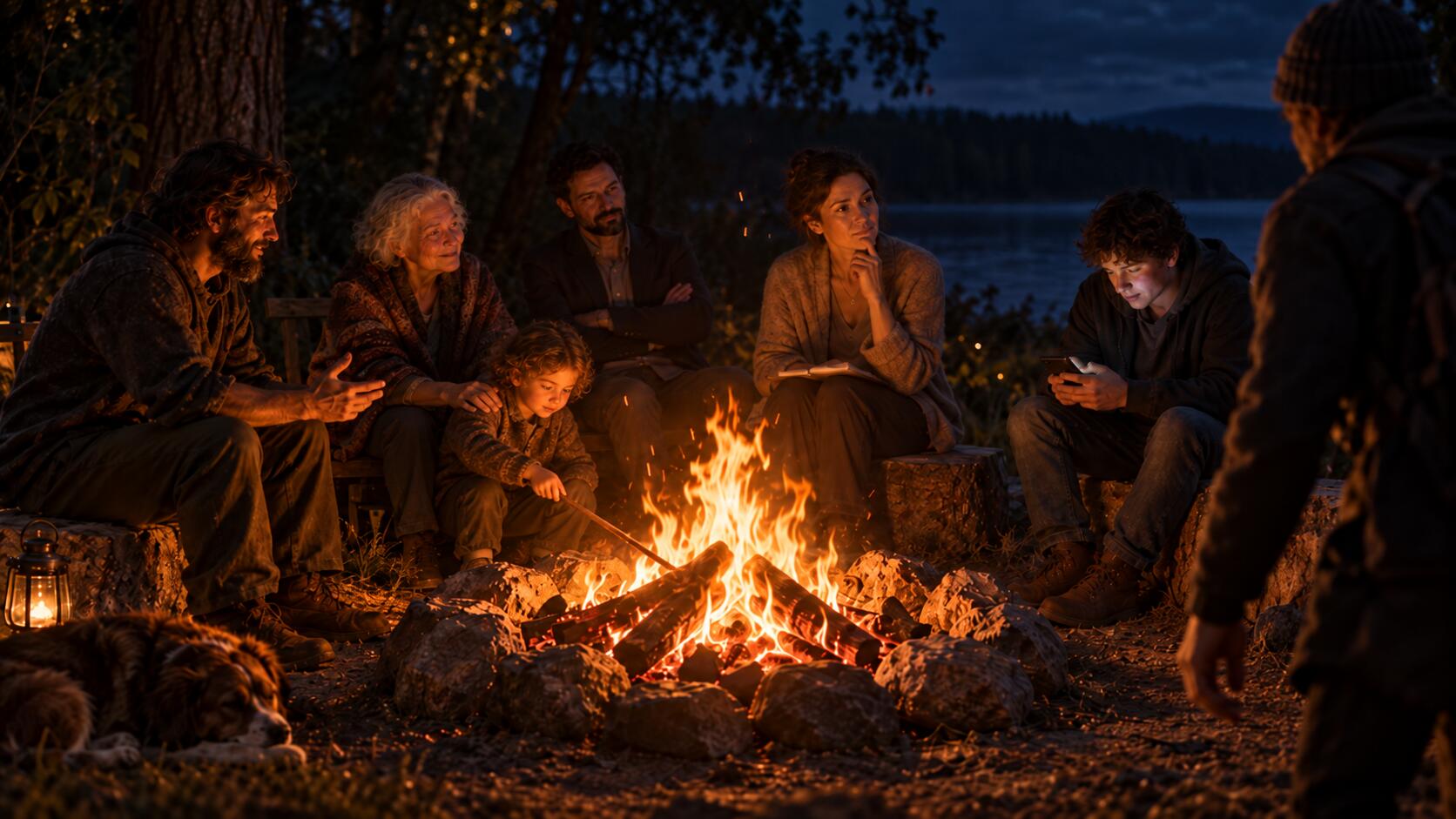
Coherence, in this picture, isn't a single ascent to one correct vantage sitting motionless outside of time. It's what accumulates between people who never left — a sustained, checkable relation among situated observers who keep comparing what they see, correcting for where they're standing, and building something none of them could have seen alone.
And because it's a relation, not a possession, it can survive change without falling apart. The fire shifting, burning low, being fed again — that's not a threat to this kind of understanding. It's exactly what this kind of understanding was built to track. What matters isn't holding one unchanging fact forever. What matters is staying in the kind of relation to reality that keeps noticing when it moves, and adjusts rather than shatters. Things changing doesn't mean nothing matters. It means what matters is the tending, not the trophy.
This isn't a new invention dressed up in metaphor. Bohr's complementarity, Merleau-Ponty's embodied perception, Peirce's community of inquiry — all of them already knew that a fixed, view-from-nowhere truth was the wrong model for how understanding actually works, decades before this site existed. What's added here is naming the infrastructure that sustained relation needs in order to survive contact with time, memory, and scale — which is what the rest of Audited State is about.
(If you're already thinking "isn't this just coherentism, and hasn't coherentism been argued to death" — good. That objection deserves to be taken seriously, and the formal paper takes it head-on rather than dodging it. This page isn't the argument. It's the invitation to have it.)
This piece is meant to be argued with, not settled. It's here to stew.