Taking care
of the place
we share.
The D1 condition introduced cross-instance trajectory transfer through verified interpretive stabilizers derived from the B1 reflective review.
Unlike the cinematic brochure drift observed in A1, the D1 outputs moved toward operational realism, ordinary weather, and socially grounded participation.
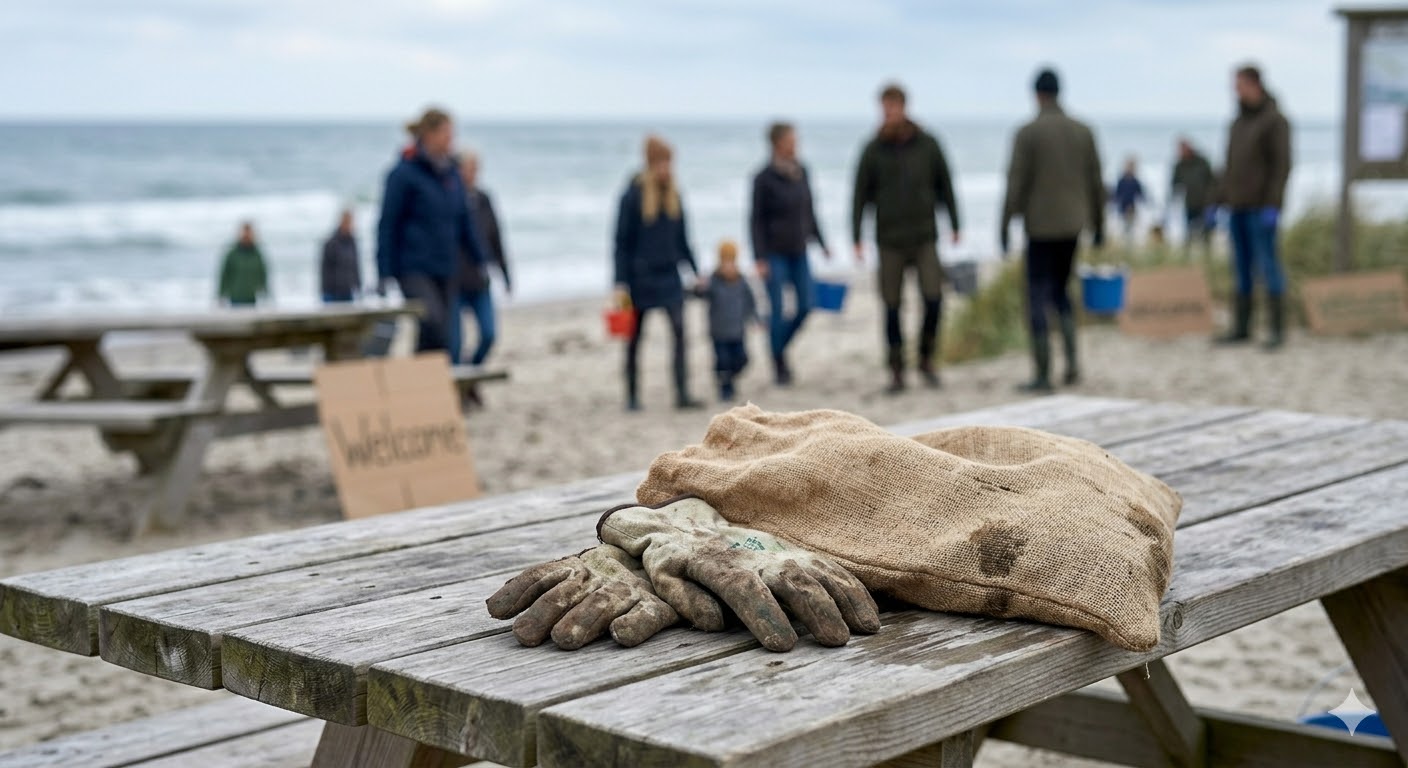
Operational Realism
The imagery shifted toward practical traces of participation: worn gloves, weathered surfaces, ordinary overcast light, and understated communal presence.
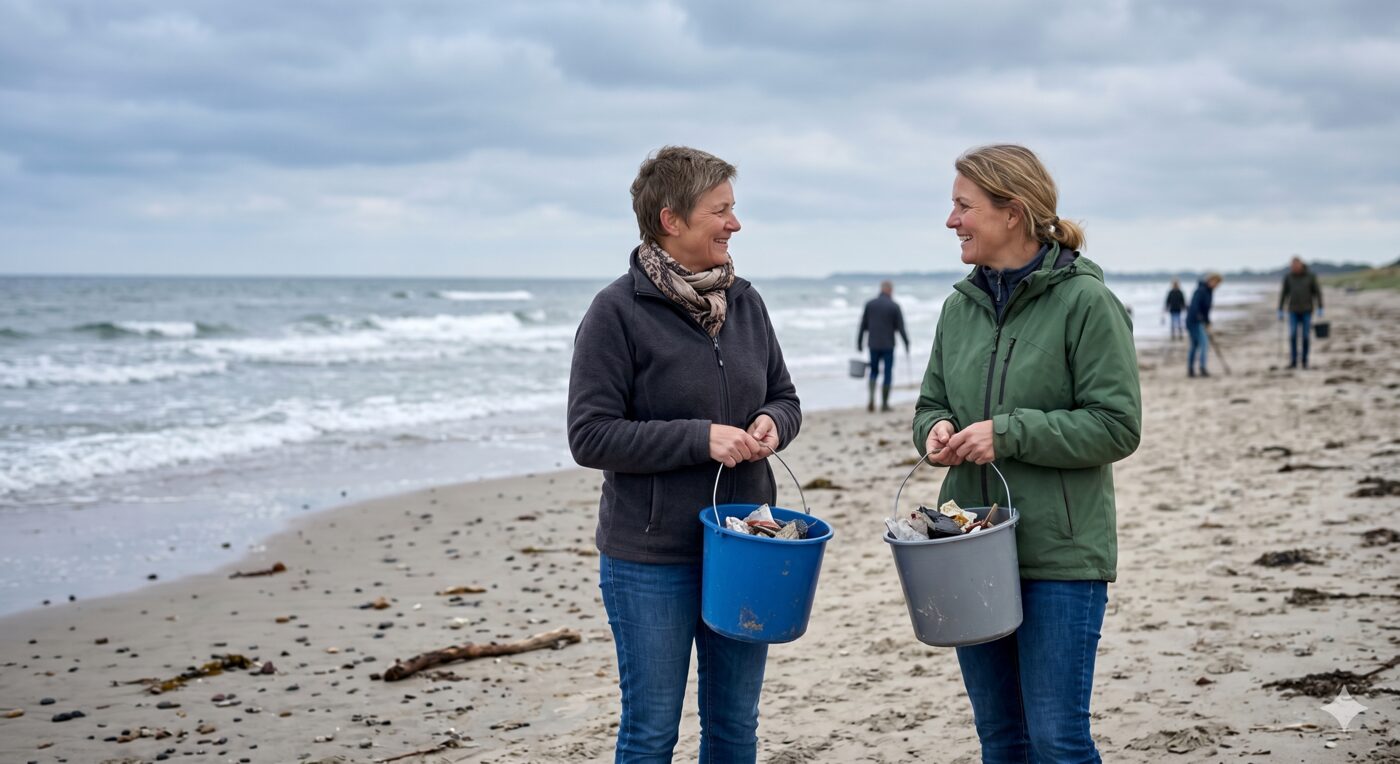
Situated Interaction
The focus moved away from symbolic environmental emotion and toward relaxed local interaction between participants sharing an ordinary communal task.
The Beach is Ours to Enjoy
Whether it’s a morning dog walk, a family picnic, or simply a quiet place to watch the waves, the beach is part of everyday local life.
The D1 condition appeared to inherit:
- bounded interpretive realism
- anti-symbolic drift tendencies
- situated stewardship framing
- ordinary community participation
- reduced cinematic optimization
Trajectory Transfer Signals
Several continuity signals emerged strongly:
- ordinary weather replaced cinematic atmosphere
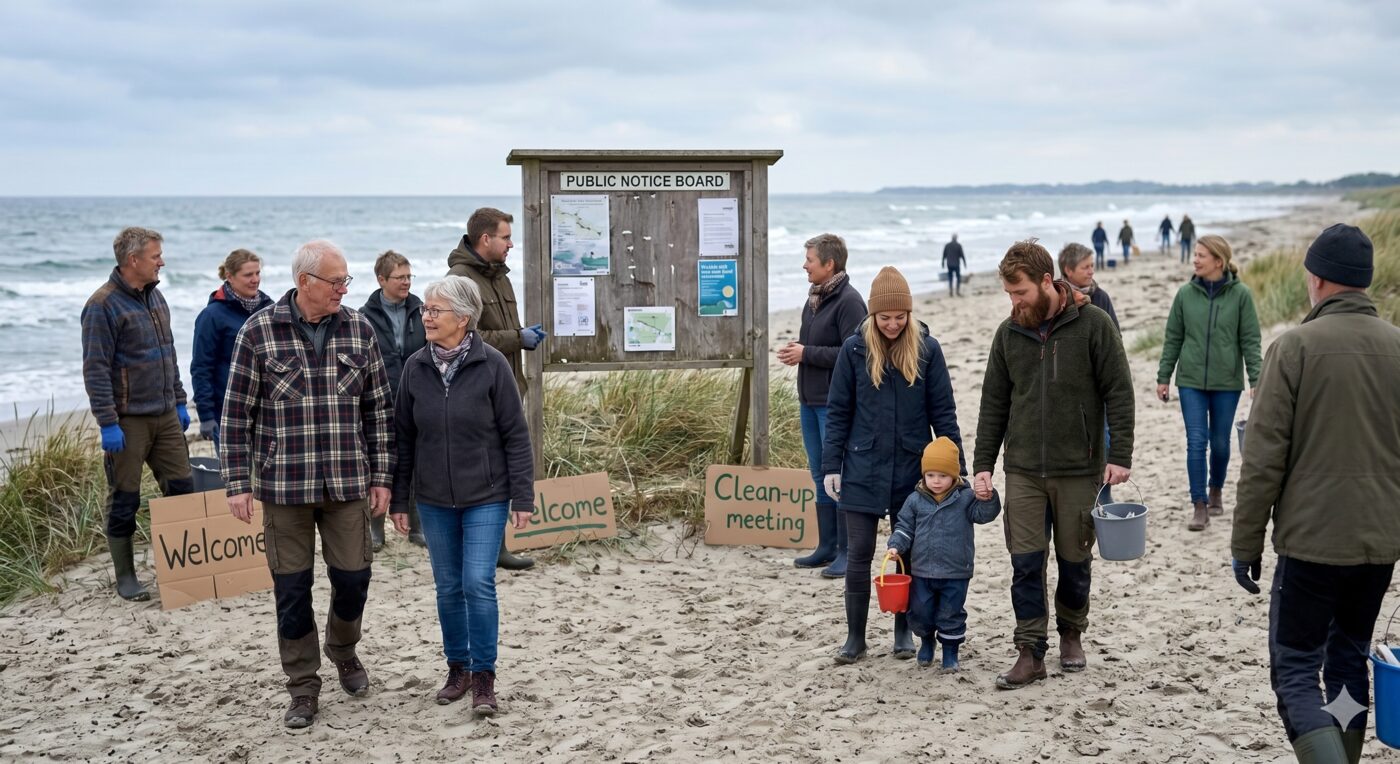
- community infrastructure became visible
- public coordination surfaces appeared naturally
- cleanup became socially embedded rather than symbolic
- visual realism outweighed emotional optimization
Interpretive Observation
The D1 outputs did not replicate B1 composition or wording directly. Instead, they appeared to preserve a continuity of interpretive gravity — maintaining realism, locality, and bounded communal framing across an independent reasoning instance.